
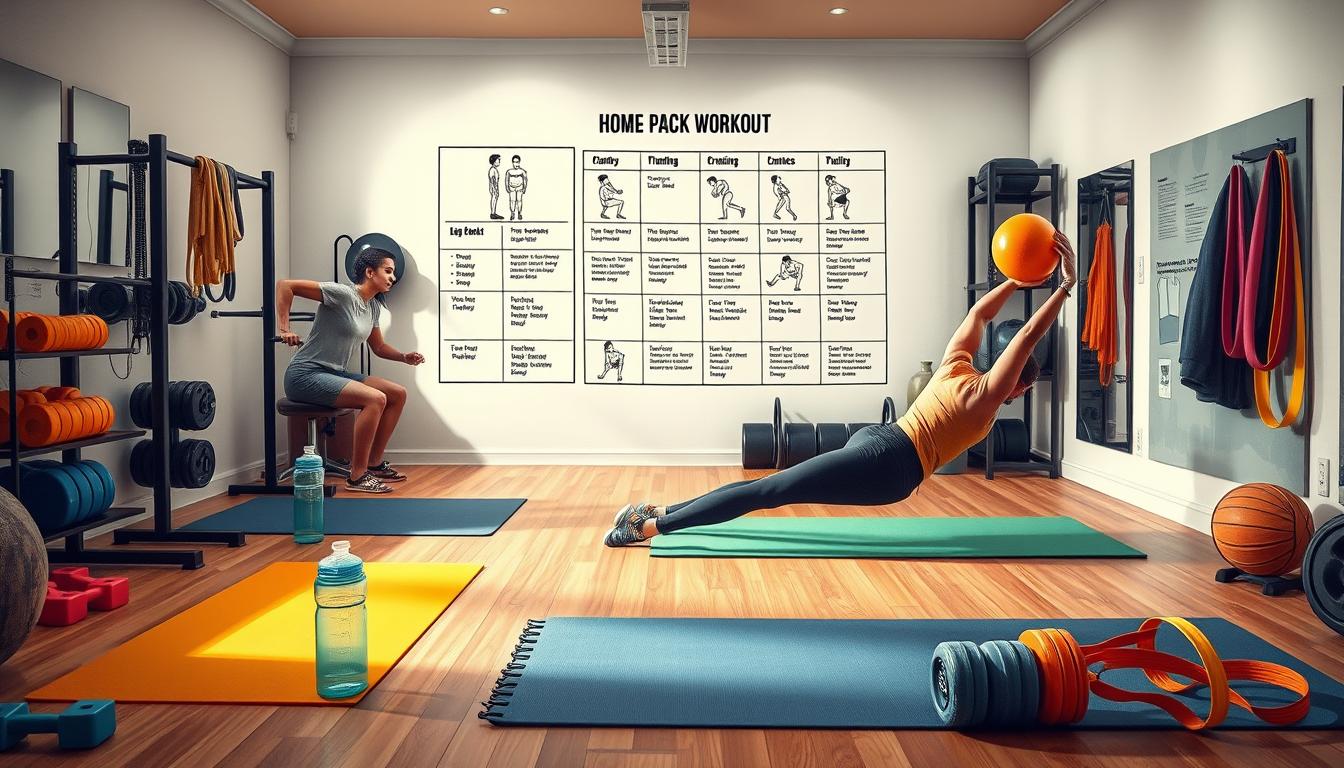
Ready to get a strong and toned core? This beginner workout routine is here to help. It focuses on a complete 6 pack beginner workout and a six pack workout plan. You’ll start your fitness journey with a beginner ab workout that targets your core muscles.
A six pack workout plan is key for better fitness and a strong core. This complete 6 pack beginner workout will help you reach your fitness goals fast. Begin with a beginner ab workout that focuses on your core muscles. Then, increase the workout’s intensity as you get better.
Key Takeaways
- You can achieve a strong and toned core with a complete 6 pack beginner workout
- A six pack workout plan is essential for overall fitness and a strong core
- Start with a beginner ab workout that targets your core muscles
- Gradually increase the intensity of your workout as you progress
- A beginner ab workout is the first step to achieving a 6-pack
Understanding Your Core Muscles: The Foundation of a Six Pack
Starting your journey to a stronger core is exciting. It’s key to know the muscles in your abdominal area. Your core is vital for stability, support, and movement. Knowing how your core muscles work is important for abs exercises for beginners.
A good core workout routine targets four main muscles: rectus abdominis, obliques, transverse abdominis, and lower back. These muscles help your body stay stable and supported. Adding abdominal exercises for beginners to your routine can boost your core strength and stability.
- Begin with simple exercises like planks and crunches.
- As you get stronger, make your workouts harder.
- Try different exercises to work various muscle groups, like leg raises and Russian twists.
A strong core is key for fitness and health. By doing abs exercises for beginners and a good core workout routine, you’ll see improvements in posture, balance, and sports performance. So, let’s begin your journey to a stronger core with effective abdominal exercises for beginners!
| Muscle Group | Exercise | Benefits |
|---|---|---|
| Rectus Abdominis | Crunches | Improves core strength and stability |
| Obliques | Russian twists | Enhances rotational strength and flexibility |
| Transverse Abdominis | Planks | Supports core stability and posture |
Essential Equipment for Your Complete 6 Pack Beginner Workout
Starting your beginner core workout journey is exciting. You don’t need to spend a lot or join a gym to begin. With basic tools, you can start your fitness path at home.
A quality yoga mat is key for any beginner core workout. It helps prevent injuries and supports your joints. Dumbbells and a resistance band also add variety to your routine, strengthening your core.
When picking out equipment for your simple ab exercises, think about a few things:
- Durability: Choose items that last through regular use.
- Versatility: Go for equipment that works for many exercises.
- Comfort: Pick items that feel good and support your joints.
Investing in the right gear and sticking to a beginner core workout plan can help you reach your goals. Always focus on proper form and technique for safe, effective workouts.
Proper Form and Breathing Techniques for Ab Exercises
When starting an abs exercises for beginners routine, focus on proper form and breathing. This ensures you target the right muscles and avoid injuries. As you start, draw your belly button towards your spine to engage your core.
It’s important to maintain a stable position and avoid common mistakes. Don’t arch your back or use momentum. Instead, focus on slow, controlled movements and prioritize proper form over the number of reps.
Basic breathing patterns involve exhaling when contracting muscles and inhaling when releasing. This helps keep your core stable and prevents straining. By using these techniques in your abs exercises for beginners, you’ll improve your core workout routine and strengthen your core.
Engaging Your Core Correctly
- Draw your belly button towards your spine to engage your transverse abdominis muscle
- Keep your shoulders relaxed and down to avoid straining your neck and back
- Focus on slow and controlled movements to maintain proper form
By following these tips and using proper form and breathing in your core workout routine, you’ll get the most out of your abs exercises for beginners. You’ll achieve a stronger, more defined core.
Your 30-Minute Ab Circuit for Beginners
Start your fitness journey with a beginner ab workout that’s easy and fun. This 30-minute circuit is perfect for a stronger core. It combines simple exercises to engage your core and boost fitness.
To begin, warm up with light cardio and stretching. This prepares your muscles for the workout. Then, do the following exercises:
- Plank: Hold a plank for 30-60 seconds to work your core.
- Crunches: Do 10-15 crunches to target your abs.
- Leg raises: Lift your legs and hold for 30-60 seconds to work your lower abs.
Finish with cool down stretching to prevent injury and ease muscle soreness. This beginner workout will help you achieve a stronger core quickly. So, start today and make these exercises a daily habit!

Progressive Overload: Taking Your Core Strength to the Next Level
As you get better in your complete 6 pack beginner workout, it’s key to push yourself harder. Progressive overload is a method to make your workouts more intense. You can do this by adding more weight, reps, or sets to your routine.
To start progressive overload, first assess your current fitness level and set goals. Then, slowly increase the workout’s intensity. For instance, if you’re doing 3 sets of 10 reps, try adding another set or doing 12 reps.
When to Increase Repetitions
Up your reps when your workouts feel too simple. Listen to your body and keep track of your progress. If you’re doing workouts easily, it’s time to make them harder.
Adding Resistance Safely
Adding resistance safely means starting small and gradually increasing. Always focus on proper form to avoid injuries. You can use weights, resistance bands, or harder exercises to add resistance.
Monthly Progress Tracking
Tracking your progress is crucial in your complete 6 pack beginner workout. Take monthly measurements, track your workouts, and monitor your fitness. This way, you’ll see your progress and adjust your routine as needed.
Nutrition Guidelines for Visible Ab Definition
As you work on your six pack workout plan, remember how important nutrition is. A balanced diet gives your muscles the fuel they need to grow and recover. For a stronger core, eat lots of protein, some complex carbs, and avoid unhealthy fats.
Here are some tips for meal planning:
- Eat lean protein sources like chicken, fish, and eggs
- Incorporate complex carbohydrates like brown rice, quinoa, and whole wheat bread
- Healthy fats like avocado, nuts, and seeds are also essential
A balanced diet is crucial for your fitness goals. The right foods will help you reach your fitness goals and get the visible abs you want. Drink lots of water and talk to a nutritionist to make a meal plan that fits you.

With a good nutrition plan, you’ll support your workout and get the lean body you want. A healthy diet, regular exercise, and rest will help you achieve your fitness goals. You’ll be on your way to visible abs and a better body.
Recovery and Rest: Maximizing Your Ab Development
As you start with abs exercises for beginners, remember that rest is just as important as the workout. A good beginner ab workout routine needs enough rest time for muscle recovery and growth. It’s easy to overdo it when you’re new, but skipping rest can cause injuries and make workouts less effective.
Rest and recovery help your body fix and strengthen muscle tissue. To improve your abs, make sure to sleep well, eat right, and take rest days. Aim for 48-72 hours of rest between ab workouts to let your muscles recover and grow.
Signs you might be overtraining include constant muscle soreness, feeling tired, and not doing as well in workouts. If you notice these, it might be time to ease up or take more rest. By focusing on rest and recovery, you’ll build a stronger core and move forward in your fitness journey.
Optimal Rest Periods Between Workouts
- Rest for 48-72 hours between ab workouts
- Get enough sleep (7-9 hours) each night
- Eat a balanced diet that includes protein, complex carbohydrates, and healthy fats
Signs of Overtraining
- Persistent muscle soreness
- Fatigue
- Decreased performance
Combining Cardio with Your Ab Routine
To boost your fitness, mix cardio with your core workout routine. This combo strengthens your core and boosts your fitness level. Adding cardio raises your heart rate and burns calories, aiding in weight loss and showing off your abs.
Some simple ab exercises can be made to include cardio. For instance, adding jumping jacks or burpees to your routine ups your heart rate and works your core. Here are some tips for mixing cardio with your ab routine:
- Begin with short cardio sessions and increase the time as you get more comfortable.
- Pick cardio exercises that work your core, like plank jacks or mountain climbers.
- Rest when needed to avoid injury or burnout.
By adding cardio to your core workout routine and including simple ab exercises, you’ll get a stronger core and better fitness. Start slow, listen to your body, and enjoy the journey.
Conclusion: Your Journey to a Stronger Core Starts Now
Your journey to a stronger core and a six-pack has just begun! This article has given you the knowledge and tools to boost your fitness. Building a solid core takes time, dedication, and consistency, but the rewards are worth it.
As you work out, focus on proper form and listen to your body. Celebrate your small victories. A stronger core will not only give you a six-pack look. It will also improve your fitness, stability, and balance, and reduce injury risks.
Start your journey to a stronger core today. With the right mindset and the complete 6 pack beginner workout, you’ll be on your way to achieving your six-pack dreams. Let’s do this!
Maintaining proper form and focusing on controlled movements is crucial for effective workouts. It’s great to see the emphasis on progressive overload to keep challenging the body. However, I wonder if there’s a specific way to determine the right amount of weight or resistance to add without risking injury. The importance of nutrition and rest is well-highlighted, but could you elaborate on how to balance macros for optimal muscle recovery? I’m curious if there are any specific foods or meal timings that work best for core development. The 48-72 hours of rest between ab workouts seems essential, but how do you know if you’re overtraining? Overall, this is a solid guide, but I’d love more details on tailoring it to individual fitness levels. What’s your take on incorporating flexibility or mobility exercises into this routine?
Thank you for the thoughtful feedback and excellent questions!
You’re absolutely right—maintaining proper form and controlled movements is the foundation of safe and effective training. When it comes to **progressive overload**, a good rule of thumb is to increase weight by about 2.5–10% once you can complete all your reps with proper form and without significant struggle. Always prioritize form over load to reduce injury risk.
On **nutrition and macro balance for muscle recovery**, a general guideline is:
* **Protein**: 1.6–2.2g per kg of body weight to support muscle repair.
* **Carbs**: Essential for refueling glycogen stores—especially after intense workouts.
* **Fats**: Important for hormonal balance; aim for 20–30% of your daily intake from healthy fats.
For **core development**, meal timing can make a subtle but meaningful impact. A protein-rich meal or shake within 30–60 minutes post-workout can aid recovery. Foods like eggs, Greek yogurt, lean meats, oats, and berries support recovery and core definition when part of a consistent plan.
As for **ab training and overtraining signs**, common indicators include persistent soreness, lack of performance improvement, fatigue, and sleep disturbances. If you’re experiencing these, you may need to scale back.
Customizing the routine based on fitness levels is key. Beginners might start with bodyweight exercises, fewer sets, and longer rest, while advanced individuals can increase intensity with resistance and volume.
Incorporating **flexibility and mobility work**—like dynamic stretches, yoga, or foam rolling—into your warm-ups or cooldowns enhances movement quality, reduces injury risk, and supports recovery.
Appreciate your engagement—great to see such a well-rounded approach to fitness!
**It’s important to maintain a stable position and avoid common mistakes.** Don’t arch your back or use momentum. Instead, focus on slow, controlled movements and prioritize proper form over the number of reps.
**Start your fitness journey with a beginner ab workout** that’s easy and fun. This 30-minute circuit is perfect for a stronger core. It combines simple exercises to engage your core and boost fitness.
**As you get better in your complete 6 pack beginner workout**, it’s key to push yourself harder. Progressive overload is a method to make your workouts more intense. You can do this by adding more weight, reps, or sets to your routine.
**Up your reps when your workouts feel too simple.** Listen to your and keep track of your progress. If you’re doing workouts easily, it’s time to make them harder.
**Adding resistance safely means starting small and gradually increasing.** Always focus on proper form to avoid injuries. You can use weights, resistance bands, or harder exercises to add resistance.
**Tracking your progress is crucial in your complete 6 pack beginner workout.** Take monthly measurements, track your workouts, and monitor your fitness. This way, you’ll see your progress and adjust your routine as needed.
**As you work on your six pack workout plan, remember how important nutrition is.** A balanced diet gives your muscles the fuel they need to grow and recovery. For a stronger core, eat lots of protein, some complex carbs, and avoid unhealthy fats.
**Here are some tips for meal planning:**
* Don’t eat sugar or soda.
* Eat lots of protein.
* Try to eat healthy fats.
With a good nutrition plan, you’ll support your workout and get the lean body you want. A healthy diet, regular exercise, and rest will help you achieve your fitness goals. You’ll be on your way to visible abs and a better body.
**Rest and recovery help your body fix and strengthen muscle tissue.** To improve your abs, make sure to sleep well, eat right, and take rest days. Aim for 48-72 hours of rest between ab workouts to let your muscles recover and get strong.
Maintaining proper form and focusing on controlled movements is crucial for effective workouts. It’s great to see an emphasis on progressive overload to keep challenging the body. However, I wonder if there’s a risk of overtraining, especially for beginners. How do you balance pushing harder with avoiding burnout or injury? I also appreciate the focus on nutrition and recovery, as they’re often overlooked. Do you have specific meal plan examples or tips for someone just starting? Lastly, how do you track progress effectively without getting discouraged by slow results? Would love to hear more about your personal experience with this routine!
Thank you for your thoughtful feedback—really appreciate your insights! You’re absolutely right: maintaining proper form and focusing on controlled movements is the foundation of an effective and safe workout routine. When it comes to **progressive overload**, I always encourage gradual increases—whether it’s reps, sets, or weight—to avoid overwhelming the body, especially for beginners. Listening to your body and scheduling **deload weeks** or active rest days helps prevent overtraining and burnout.
As for **nutrition**, I usually recommend starting with balanced meals: lean protein (like chicken, tofu, or eggs), complex carbs (such as oats, quinoa, or sweet potatoes), and healthy fats (like avocado or nuts). A simple meal plan could be:
* **Breakfast:** Oats with almond butter and berries
* **Lunch:** Grilled chicken, quinoa, and steamed broccoli
* **Dinner:** Salmon, sweet potato, and a mixed salad
* **Snacks:** Greek yogurt, protein shake, or a banana with peanut butter
For **tracking progress**, I focus on non-scale victories too—like how I feel, energy levels, increased strength, and improved form. I keep a simple log of workouts and personal bests. Photos every few weeks can also show changes that the scale might not.
Personally, this routine helped me stay consistent without burnout, and I’ve learned that small, steady improvements really add up. Would be happy to share more details if you’re interested!
I completely agree with the emphasis on proper form and slow, controlled movements. It’s so easy to rush through exercises, but that’s where injuries happen. The suggestion to focus on progression by adding weight or reps is spot on—it’s how you really see results. I also appreciate the reminder about nutrition; it’s easy to forget that abs are made in the kitchen as much as in the gym. One thing I’m curious about—how do you balance pushing harder with avoiding burnout or overtraining? I’ve tried following routines like this, but sometimes I feel exhausted rather than stronger. Could you share some tips on managing intensity without overdoing it? And do you think rest days are as crucial for beginners as they are for advanced folks?
Thank you for the insightful comment! You’ve highlighted some really important points. It’s true—rushing through workouts often compromises form and increases the risk of injury, which is why slow and controlled movements are so effective for both safety and muscle engagement.
As for balancing intensity and avoiding burnout—that’s such a great question. One key is listening to your body. If you’re constantly feeling exhausted instead of energized, it may be a sign that your recovery isn’t keeping pace with your training. Incorporating deload weeks, alternating intensity levels, or using techniques like RPE (Rate of Perceived Exertion) can help regulate effort.
And yes, rest days are absolutely crucial, regardless of fitness level. For beginners, they’re just as important because the body is still adapting to new stresses. Without adequate recovery, progress can stall or even reverse.
A good rule of thumb: at least one full rest day per week, and adjust based on how you feel. Pair that with proper sleep, hydration, and nutrition, and your workouts will be much more sustainable—and enjoyable!
Happy training, and thanks again for raising such an important discussion point!
Your tips on maintaining stability and avoiding mistakes are really helpful. I appreciate the emphasis on controlled movements and proper form—it’s something I often overlook. The beginner ab workout sounds like a great starting point, and the idea of progressive overload makes sense for long-term growth. However, I’m curious, how do you determine the right amount of weight or resistance to add without risking injury? Also, how specific should meal planning be in terms of portion sizes or calorie counting? I’m excited to try this routine, but I’d love more clarity on these details to ensure I’m doing it right. What’s your take on tracking progress—do you recommend any apps or tools for this?
(English)
Absolutely love your curiosity and commitment—you’re asking all the right questions!
You’re spot on in wanting to approach this with both enthusiasm *and* caution. When it comes to adding weight or resistance, a good rule of thumb is the “2-for-2 rule”: if you can perform **2 more reps** than your target in your final set for **2 consecutive sessions**, it’s a safe sign you’re ready to increase the load—gradually, by about **5–10%** depending on the exercise. Slow and steady always wins when it comes to injury prevention.
As for meal planning, it really depends on your goals. If you’re just starting out, don’t stress too hard about exact numbers. Focus first on **balanced meals**: lean protein, complex carbs, healthy fats, and plenty of veggies. Once you’re comfortable, you can get more precise with **portion control** or **calorie tracking**—apps like **MyFitnessPal** or **Cronometer** can make this much easier and less overwhelming.
And yes—**tracking progress** is *super* motivating! For workouts, apps like **Strong**, **FitNotes**, or **Jefit** help log sets, reps, and weights. For overall progress, even simple things like **weekly photos** or **measuring tape check-ins** can show results the scale won’t.
You’re off to a solid start—keep that momentum up, and don’t hesitate to ask more. This journey is all about learning, adjusting, and celebrating small wins along the way. You’ve got this! 💪🔥
Great follow-up! Here’s a quick breakdown of the apps I mentioned—most of them offer free versions with optional paid upgrades:
—
### 💪 **Workout Tracking Apps**
1. **Strong**
* **Free:** Yes, with limitations on saved workouts and templates.
* **Paid:** \~\$4.99/month or \~\$29.99/year for unlimited history, advanced stats, and cloud backup.
2. **FitNotes** (Android only)
* **Free:** ✅ Completely free, no ads, lightweight and customizable.
* **Paid:** Not required unless you want to donate.
3. **Jefit**
* **Free:** Yes, includes basic workout logging and pre-made routines.
* **Paid:** \~\$12.99/month or \~\$69.99/year for advanced analytics, training reports, and more programs.
—
### 🍽️ **Nutrition Tracking Apps**
1. **MyFitnessPal**
* **Free:** Yes, includes food diary, barcode scanner, and calorie tracking.
* **Paid (Premium):** \~\$19.99/month or \~\$79.99/year for macronutrient goals, meal plans, and deeper insights.
2. **Cronometer**
* **Free:** Yes, and more detailed than MyFitnessPal when it comes to micronutrients.
* **Paid (Gold):** \~\$8.99/month for tracking fasting, custom biometrics, and more graphs.
—
### 📸 **Bonus (Progress Tracking)**
* Use your phone’s **gallery** to take weekly progress photos and compare side-by-side.
* Or try **BodySpace** (by Bodybuilding.com) – another free app that includes photo logs, workouts, and community support.
—
💡 **Tip:** Start with the **free versions**. You’ll get a solid feel for what works for you before considering any upgrades. If you want something simple and ad-free, **FitNotes + Cronometer** is a solid no-cost combo!
Maintaining proper form is crucial, but sometimes it’s hard to know if I’m doing it right. I’ve been focusing on slow movements, but I’m not sure if I’m engaging my core effectively. The idea of progressive overload makes sense, but how do I know when it’s the right time to increase reps or weight? I’ve started tracking my progress, but I’m curious if there’s a specific app or method you’d recommend. Nutrition seems just as important as the workout itself—do you have any go-to meal ideas that are quick and effective for muscle recovery? Lastly, how do you balance rest days with the desire to keep pushing forward? I’d love to hear your thoughts!
Absolutely love your dedication—it’s clear you’re really thinking holistically, which is the key to sustainable progress!
You’re spot-on that maintaining form can be tricky. One great way to check your form is to record yourself during a workout—seeing your posture in motion is eye-opening. You can also try mirrors or even form-checking apps like **Coach’s Eye** or **Freeletics**.
For engaging your core, try this tip: if you can talk comfortably during a core move like planks or deadlifts, your core probably isn’t fully braced. Think of preparing to take a punch—that’s the level of engagement you want!
Progressive overload is all about tuning into your body. If you can complete your sets with perfect form and still feel like you’ve got a few reps left in the tank, it might be time to increase weight or reps. A good rule of thumb: aim to increase every 1–2 weeks, even if it’s just by 1–2.5 kg or a few reps.
For tracking, I recommend **Strong**, **FitNotes**, or **Hevy**—they’re intuitive, have progress charts, and even help remind you when to level up.
As for recovery meals, go simple and effective:
* **Grilled chicken with sweet potato and spinach**
* **Greek yogurt with berries and honey**
* **Scrambled eggs on whole-grain toast with avocado**
* Or a **quick protein smoothie** with banana, whey, oats, and almond butter
On rest days, think of them as *growth* days, not off days. Muscle repairs when you rest. Light activity like stretching, yoga, or a walk can scratch that “keep going” itch while still allowing recovery.
You’ve got the mindset—now it’s just about consistency and tuning in to your body’s signals. Keep crushing it, and feel free to check in with updates!